
"coffee plant introductions"
20000 article(s) found

Introduction of Coffee planting and Seedling in Santa Barara Manor, Honduras
Introduction to the planting and breeding of Coffee in Santa Barara Manor, Honduras Coffee has the aroma of toffee and caramel, with a floral finish, and the taste is very refreshing. Use a bean grinder to grind 10g coffee beans into coffee powder the size of granulated sugar, put it into a Hanmei elite coffee machine, and then choose the water level line of 8OZ. Press the switch, after a while, the delicious coffee comes out of the oven! No
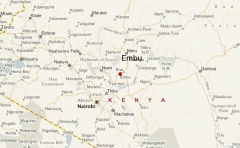
Kenya Embu Embu production area north of the only treatment plant-Kaishenggarili treatment plant Introduction
For professional barista exchanges, please pay attention to Coffee Workshop (Weixin Official Accounts cafe_style), an important coffee producing area located in the southeast slope of Kenya, Embu. The area is situated at an average altitude of 1650 meters, and nearly 70% of the population is small farmers, most of whom grow tea and coffee. The plant opened in 1966.

How are the top ten coffee in Ethiopia grown? Introduction to the planting model of coffee beans in Ethiopia
The six modes of growing coffee in Ethiopia are the most diversified in the world. People are usually divided into two large planting environments according to the degree of vegetation cover. The first type is the forest environment with shade trees. The second type is directly in the full sun environment, and these two types of environments derive six kinds of environment.

Sulawesi coffee beans processing method sun washing red honey-processing plant cooperative introduction
Sulawesi Coffee Bean Processing Method Sun-washed Red Honey-Processing Plant Cooperative Introduction Ethiopia is an agricultural country with a history and tradition that can be called the origin of coffee. The origin of the name coffee is believed to be Kafa in the southwest, while the Hitomo region in the south is the main place of origin. Eastern Highlands Harrah, also known as Harrah's Coffee, some say it's the only coffee

Flavor description of Katim Coffee beans introduction of varieties produced by grinding scale
Katim Coffee Bean Flavor description Grinding scale production area Variety introduction this variety belongs to high and stable yield. The results of trial planting in different ecological types show that as long as it is planted in accordance with high-yield cultivation techniques, a higher yield will be obtained. the average yield per mu is more than 150 kg, and the small area can reach more than 400 kg. 1. The state-run Lujiang farm in Baoshan City planted 12.6 mu in March 1991.

Introduction of Coffee Flavor description and Taste treatment method in Colombian Coffee Manor
Flavor description of Colombian coffee plantation area taste treatment varieties introduce three ways of plantations: sunshine plantations, full shade plantations and semi-shade plantations. Plantations with more than 50 plants per hectare are fully shaded plantations, 25-50 plants are semi-shaded plantations, and less than 25 plants are called sunshine plantations. The plantations of two neighbors with the same planting conditions are covered.

Introduction of the origin and planting conditions of Richter Manor in Costa Rica
ElBalar is a 5-hectare farm where Kaddura is grown. It is owned by the father of three siblings: Leo,Melvin and ElianRobles, who worked on the farm with their father for many years. ElBalar is located about 1500 meters above sea level in San Marco de Tarazu. The farm has rich sandy soil and can be planted with high quality.

Introduction to the Coffee planting Environment in Honduras where the planting area belongs to the Mountain area
For coffee production, the geographical conditions of Honduras are no less than those of its neighboring coffee-producing countries such as Guatemala and Nicaragua. There are 280000 hectares of coffee plantations in Honduras, mainly small coffee plantations, most of which are less than 3.5ha. These coffee plantations account for 60% of the total coffee production in Honduras. In the coffee garden, because the planting land belongs to

Introduction to the planting environment of Yega Xuefei Coffee
Yejassefi's coffee trees were planted by European monks (a bit like Belgian monks growing wheat to brew beer) and were later transferred to farmers or cooperatives. Yejia Xuefei is actually constructed by surrounding coffee communities or cooperatives, including Edido Idido, Hafusa Harfusa, Hama Hama, Biloya, near Fog Valley Misty valley, all washed with water, but also

Guatemala coffee estate production area introduction pico tenango highland production area introduction
Like Costa Rica, El Salvador, Mexico, Honduras and other Central American countries, Guatemala is classified according to altitude. Coffee produced at higher altitudes is generally of higher quality than coffee produced at lower altitudes because the temperature decreases with altitude. At high altitudes, the slower coffee grows, the better for the accumulation of good substances.

Introduction to AA, Kiawamururu processing Plant of Rumukia Coffee Farmers' Cooperative in Kaili, Kenya
Exchange of professional baristas Please follow the Coffee Workshop (official Wechat account cafe_style) Flavor introduction the most obvious dry aroma is the smell of red fruit, with a hint of black brown sugar sweetness and a hint of rugged beet sugar. The aroma of the fruit is very rich, mixed with a variety of aromas, reminiscent of cooking red apples and grapes with black sugar. Coffee is also full-bodied

Introduction of Brazilian Coffee Bean planting cost Brand characteristics, Flavor description and Taste varieties
Brazilian Coffee Bean planting cost Brand characteristics Flavor description Variety introduction since the introduction of coffee trees from French Guiana (Guyana) in 1720, coffee production has gradually become a science. Before 1990, the Brazilian government carried out strict monitoring of the coffee industry, with both strict intervention and price protection measures, and the state has been implementing minimum price protection measures for farmers.

Introduction of mocha coffee producing area, planting area and manor
The shape of mocha coffee beans is similar to that of Ethiopia's Harrar coffee beans.

Introduction of Colombian Coffee treatment introduction of Colombian Black Sugar Girl Manor Coffee Flavor
Coffee workshop (official Wechat account cafe_style) Today Colombia is the world's third largest coffee producer and exporter, the world's largest exporter of Arabica coffee beans, and the world's largest exporter of washed coffee beans. Colombian coffee is a representative of Arabica coffee.

Panamanian coffee with smooth taste Introduction Panama coffee estate Introduction Emerald estate
There are three types of plantation: sun plantation, full shade plantation and half shade plantation. Plantations with more than 50 trees per hectare are full shade plantations;25-50 trees are half shade plantations, and 25 or less are sun plantations. What effect does shade and no shade have on coffee grown in two neighboring plantations under the same conditions? Shade plantations can slow coffee

A brief introduction to the planting history of Colombia? Is Colombian coffee the best?
Professional coffee knowledge exchange more coffee bean information please follow the coffee workshop (Wechat official account cafe_style) Colombia's planting history introduction? Is Colombian coffee the best? The world's largest producer of high-quality coffee, traditional deep-roasted coffee has a strong and memorable taste. Colombian coffee is one of the few countries in the world to sell coffee.

Burundian AA Coffee | Ngozi-Prokasta treatment Plant-introduction to the Flavor of washed AA
Ngozi-Procasta treatment plant-washed AA varieties: bourbon Bourbon grade: AA production area: Ngozi Ngozi altitude: 1700m-1900m harvest time: March-January refined method: water washing method reference flavor: nuts, melon, walnut is located in Burundi in the interior of Africa, covering an area of only 28000 square kilometers, the terrain is mostly hills and mountains, the main climate is tropical air.

Coffee and bean washing method taste semi-washing method step flavor description manor treatment plant introduction
Coffee bean washing method taste semi-water washing step flavor description manor treatment plant introduction drying: after washing, at this time, the coffee bean is still wrapped in the pericarp, the moisture content is up to 50%, must be dried, the moisture content is reduced to 12%, otherwise it will continue to ferment, mildew and rot. The better treatment is to use sunlight to dry, although it takes 1 to 3 weeks, but the flavor is excellent and the phase is excellent.

The planting Environment of Nicaraguan Coffee Manor introduction to Los Congo Manor
The whole flavor is clean and sweet, with Kaddura sweet characteristics, bright and fresh green apple acid, a hint of rose tea, white grapefruit in the middle, clear and clean and pleasant taste. Huigan apple honey orange fruit is sweet, balanced and juicy, sweet after rhyme. Caturra Kaddura is a hot variety in recent years. It is a natural variety of bourbon and has been cultivated in Central and South America since 1950s. [manor]

How about Kenyan Coffee in Africa A brief introduction to the story of Kenyan Coffee plus Chasha processing Plant
Professional coffee knowledge exchange more coffee bean information please follow the coffee workshop (Wechat official account cafe_style) front street-Kenya coffee Jiachasha processing plant brief introduction most coffee beans are uniformly graded by the Kenya Coffee Agency and then sold on the auction floor, the public auction system can be traced back to 1934, the auction method adopts the agent system, Kenya has 50 holders